
 |
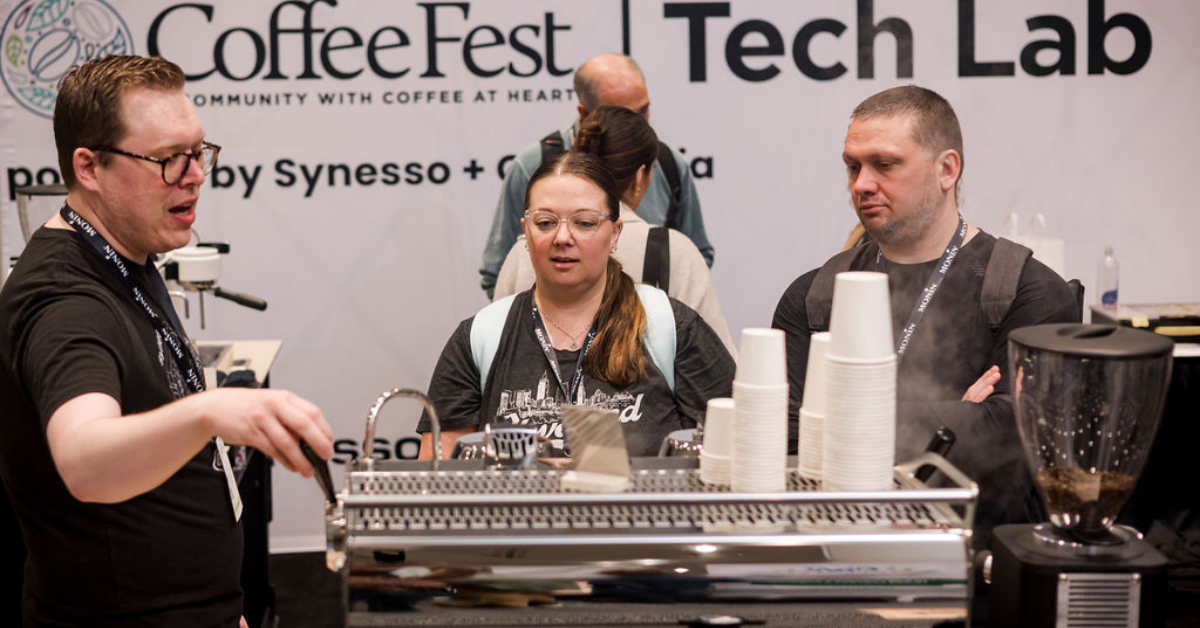
The Editor's Pour We travel with an enormous amount of equipment for Coffee Fest, and between crates, pallets, and cross-country freight, that gear takes an absolute beating. Fortunately, we have the pro technicians at Synesso in our corner to bail us out when something breaks down on the show floor. But living on the road means we see firsthand exactly what a lack of consistent care does to hard-working machinery - because we simply don't have the luxury of running daily preventative cycles while gear is in transit. It's the exact reason our hands-on preventative maintenance workshops in the Tech Lab remain some of the most critical sessions on our schedule. Take our word for it: it is substantially cheaper and less painful to preserve a machine with proactive maintenance than it is to diagnose, scramble, and pay for a cure born of neglect. - Lani Kingston, Education & Conference Director, Coffee Fest |
The Editor's Pour
We travel with an enormous amount of equipment for Coffee Fest, and between crates, pallets, and cross-country freight, that gear takes an absolute beating. Fortunately, we have the pro technicians at Synesso in our corner to bail us out when something breaks down on the show floor. But living on the road means we see firsthand exactly what a lack of consistent care does to hard-working machinery - because we simply don't have the luxury of running daily preventative cycles while gear is in transit.
It's the exact reason our hands-on preventative maintenance workshops in the Tech Lab remain some of the most critical sessions on our schedule. Take our word for it: it is substantially cheaper and less painful to preserve a machine with proactive maintenance than it is to diagnose, scramble, and pay for a cure born of neglect.
- Lani Kingston, Education & Conference Director, Coffee Fest
By Josh Lieuallen, Marketing Lead at Synesso
When you buy a car, you know what it needs on a daily, weekly, or even 6-month basis. You know to fill with gas, change the wipers before spring, rotate your tires, and you know from the squeal that the brakes need replacing.
As the cornerstone of any coffee shop, espresso machines deserve extra attention from every person interacting with it, not just the owner. And just like a car, any investment in quality equipment only pays off if you take care of it.
Making your espresso work consistently starts with your machine, and learning some of the basic components of your machine and teaching your team to take care of them can save you thousands of dollars and lots of headaches.
BACKFLUSHING: MOVING FROM CHORE TO MINDSET
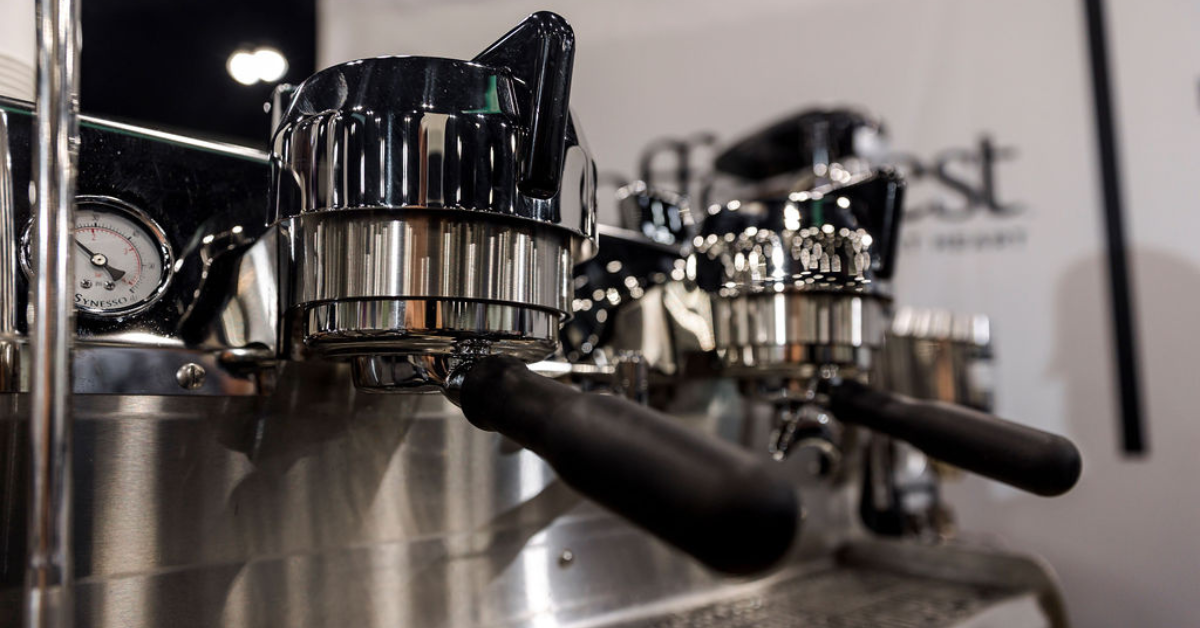
Backflushing an espresso machine is a ritual that every barista should know from their first day on the job.
As a machine manufacturer, we highly recommend teaching baristas about cleanliness before teaching espresso. There's nothing more disappointing than all that espresso theory and hour-long dial-ins going to waste because the grouphead has old coffee oil creating that burnt taste.
A lot of baristas see backflushing as simply another line on the checklist, but the reality is that clean espresso machines produce amazing espresso. Preventing old coffee oils from going rancid isn't just about the taste - it's about food safety too!
So how can you change the way your baristas think about cleaning?
Shift them from thinking about Preventative Maintenance and how taking care of your machine not only keeps your espresso consistent but is also an opportunity to learn about the tools you work with every day. It's the perfect chance to make the espresso machine a little less intimidating, while also building respect and collective ownership for it.
PREVENTATIVE MAINTENANCE: GASKETS, BASKETS, SPRINGS, & SCREENS
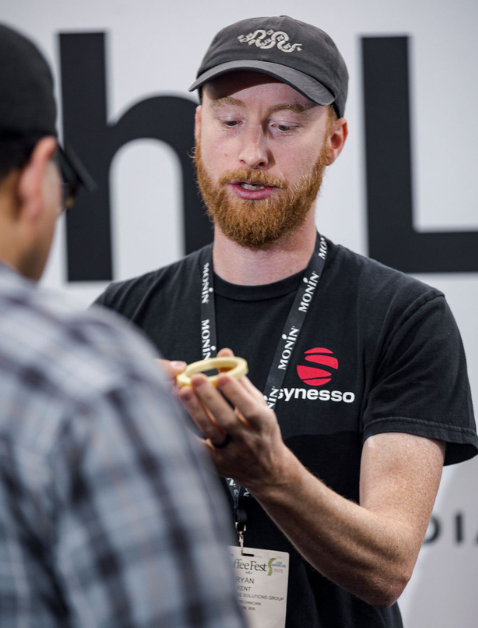
| After your baristas know how to backflush, the best next step is to teach them about the basic wear-and-tear components on an espresso machine. These are designed to wear under normal use, need regular upkeep, and are usually the likely culprits of common espresso issues. They are not covered under manufacturer warranties, and depending on the manufacturer and your volume, they might be recommended to replace every 3 months or every 6 months. Teaching your crew to spot wear makes them your frontline defense against costly emergency technician calls. It's easy for people to understand why these are important. It's like tires on a car - you can't go anywhere without them, and they get worn down. Your local coffee technician will love you even more if they know you can handle these basics and that they'll always be walking into a machine that is well taken care of! |
 |
So, what are these components? And how do we recognize signs of wear?
NOTE: These components can all be safely changed with your machine turned on and hot. You might require your staff to wear work gloves for some extra heat protection.
GASKETS
Every time you insert and twist a portafilter, it locks into a gasket. This one actually looks like a little tire!
Sometimes the gasket is rubber, and sometimes it's silicone. Either way, as you lock in the portafilter, you're slowly eroding the material onto the portafilter.
Signs of wear:
- Locking in past "6 o'clock" or blocking another portafilter
- Water leaking during brew
- Significant change in resistance when locking in (easier or harder)
How to change
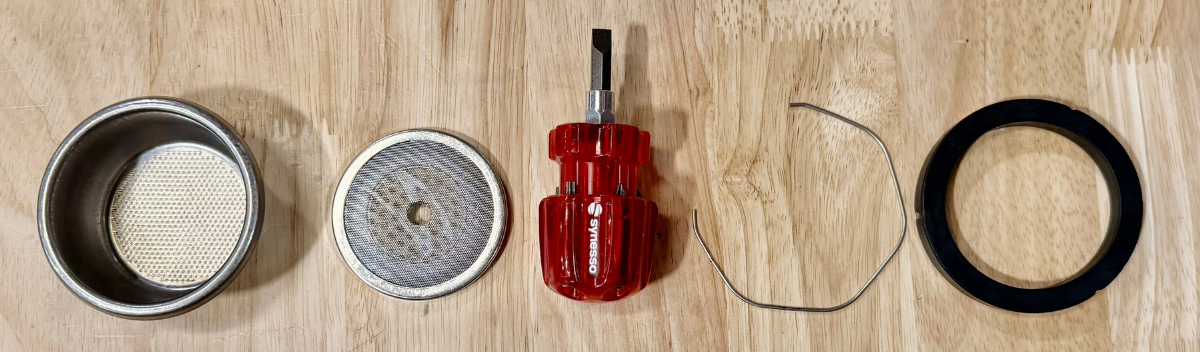
Every machine is different, but in general, you'll need to use a flat edge or pick tool to pry out the gasket. This one is super important to change sooner than later - waiting too long means that the material can harden from constant heat and be more difficult to get out.
To replace, you simply add some food-grade lubricant and use a portafilter to wedge it into place.
BASKETS
Inside every portafilter, the actual basket that you dose grounds into will also wear over time.
Out of all of these components, the wear and tear on this one is the likely culprit if your extractions are significantly changing shot to shot. The constant pressure on these baskets is what causes espresso to be so efficient, but it also means these baskets won't last forever.
If you have a bottomless portafilter, the wear will be visible from below, or even during an extraction. If you have a spouted portafilter, you should teach your crew to remove these regularly to inspect.
Signs of wear:
- Cracks forming between holes
- Any bowling or rounding on the bottom
- Major channeling or differences in extraction time or taste between shots
How to change
Using another basket or flat edge tool, simply pry the basket to release from the spring holding it in. Use this as an opportunity to check the spring! It's very effective to replace baskets and springs at the same time for consistency.
SPRINGS
The springs that hold the basket in place are often out-of-sight, out-of-mind, but fortunately they have one telltale sign that it's time to replace.
Signs of wear:
- Does the portafilter basket sometimes fall out when you're tapping out a puck?
How to replace
After taking out the basket, use your fingers or a pair of pliers to remove the existing spring. Getting in a new spring just takes lining up the interior ridge of the portafilter.
SCREENS
Integrated diffusion screens aren't standard on every commercial espresso machine. The ones that do (like Synesso) are designing their groupheads for maximum water dispersion across the espresso, for efficient and consistent extractions.
Every diffusion screen wears differently, especially if it's not reinforced and only mesh. Ideally, these should be removed every night to clean underneath and then re-installed before a backflush. While they help disperse water much better, superfine espresso grounds can make their way above a mesh diffusion screen.
This component has a significant effect on extraction and how consistent it is over time, and unfortunately, it's also the most often forgotten in cafes.
Signs of wear:
- Mesh splitting or coming undone from metal frame
- Major channeling or differences in extraction between shots
- Misshapen or bowing in the screen, not sitting flat when installed
How to replace
With a small, stubby screwdriver, remove the dispersion screw to let the screen pop off. You may want to wear work gloves or use a dry towel to handle, as the grouphead and screen will be hot to the touch, especially internally.
Simply place and re-screw in. Be careful not to overtighten, as this can damage the screen!
MAKE YOUR INVESTMENT PAY OFF
Commercial espresso machines can often become a 10-30 year investment, but it starts at taking care of it well from Day 1.
Synesso is proud to offer the global leading industry warranty on espresso machines, and even more proud of the countless 20+ year old Synesso machines that are still calling cafes home.
You have enough to worry about as a coffee shop owner. Don't let your espresso machine be one of them.
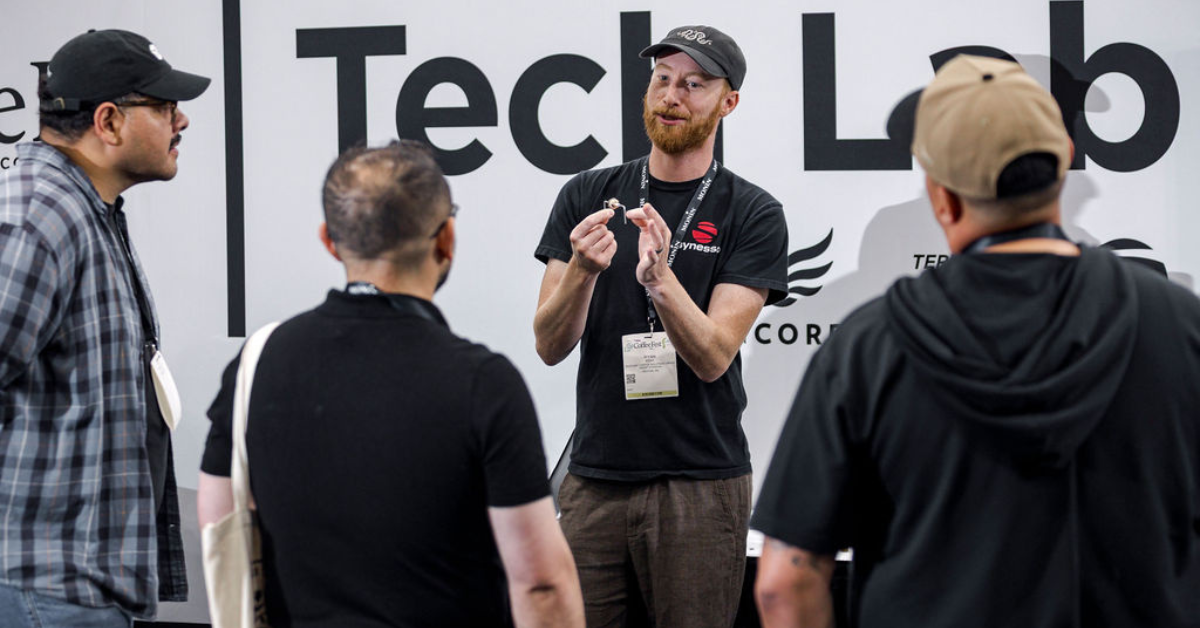
These preventative maintenance fixes can be learned easily - to see these in-person, swing by Coffee Fest Dallas-Fort Worth and visit Synesso technicians at the Tech Lab for a live demonstration both days.