)
Innovation in specialty coffee is frequently measured by technology and data, but the most disruptive shift ahead is relational. Certified Q Grader and founder of Quantum Seeds, Shanita Nicholas, challenges the traditional destination-roasting model, arguing that true hospitality requires us to move past transaction and return full storytelling and authorship to the origin.
I went quiet the first time I tasted origin-roasted coffee with the full weight of my training behind me. Which, if you know me, is more alarming than crying would have been.
This wasn’t my first encounter with coffee roasted at origin. I’d had coffee roasted over a fire in Jamaica, and in a pan over wood logs in Peru. Origin roasting had been part of my experience long before it was part of my vocabulary. But I hadn’t yet had the credentials to understand the technical conversation I was walking into.
I was in Tapachula, MX with Rosalba Cifuentes of Mayan Harvest, who has spent years building connections between growers in her region and the wider market. She is one of those people who quietly reorganizes how you see things. She introduced me to a peer of hers, a roaster and café owner in Tapachula, and we spent time in her space.
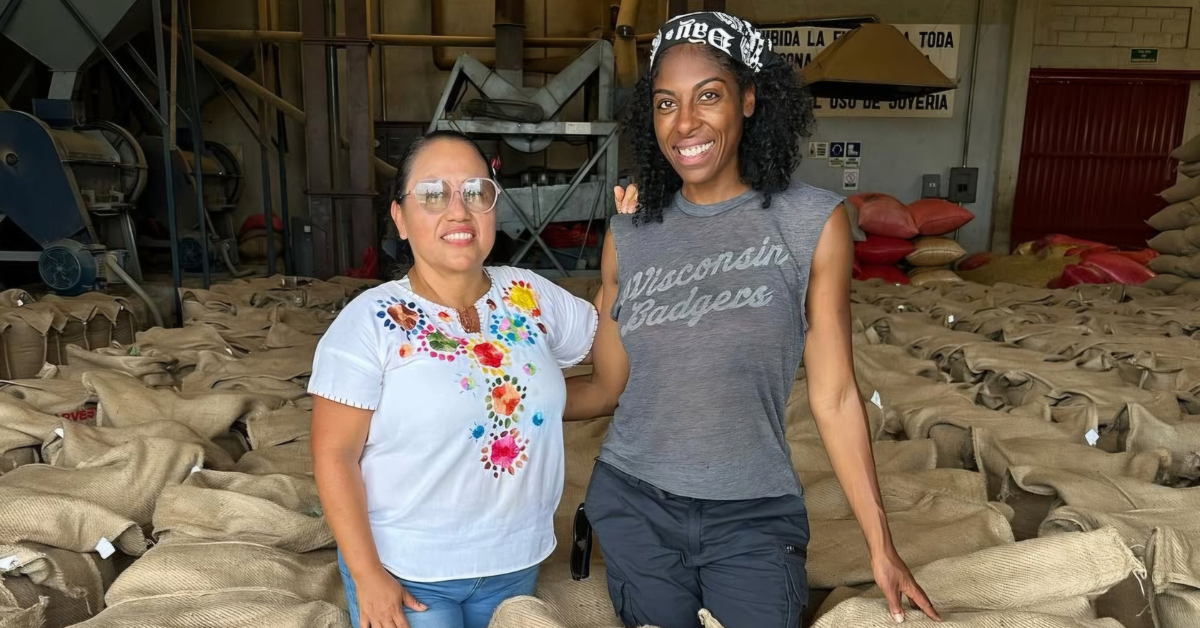
Shanita Nicholas (right) with Rosa Cifuentes (left) of Mayan Harvest
I was there as a Q grader, that was my credential, my role, my reason for being in the room. They wanted my professional read on how the roast had performed. I walked through the roastery, asked my questions, gave my thoughts.
And then I tasted the coffee and sat there and didn’t say anything for a while.
I finally had the language to understand exactly what was in that cup - the roast development, the processing decisions, the way the altitude had shaped everything. I could name it all. And what I understood, maybe for the first time with that clarity, was that this coffee was already complete before I arrived.
It was made by someone who knew exactly what they were doing, tasted in the place it came from, without the filter of someone else’s market deciding what it should be. My framework for quality, the one I’d been certified in and built a career around, was still technically correct. It just suddenly felt like one small room in a very large house I hadn’t known existed.
That’s the feeling I want to talk about. Not the disruption of it. The relief.
Finding a Table
I’ve been looking for that feeling for a long time, longer than I’d been in coffee. I was born in Germany to a military family - Black, American, queer, and perpetually from somewhere that didn’t quite have a place for all of that at once. Home has always been something I’ve had to find sideways.
Coffee kept offering it to me anyway. A plastic chair in Sidama after shared plates of shiro wot and tibs, drinking Ethiopian coffee in Ethiopia for the first time. A meetup in Atlanta with the Brewing for Equity Fellows with the Coffee Coalition for Racial Equity, where I responded to the question of what innovation in this industry could look like with "origin roasting" for the first time (not entirely sure yet what I meant by it). A dinner table in Honduras at a "Let’s Talk Coffee" conference with chemical engineers from at least six different countries, thinking: I have no idea why this feels like home, but it does.
Coffee kept finding me tables. I just had to be willing to sit down.
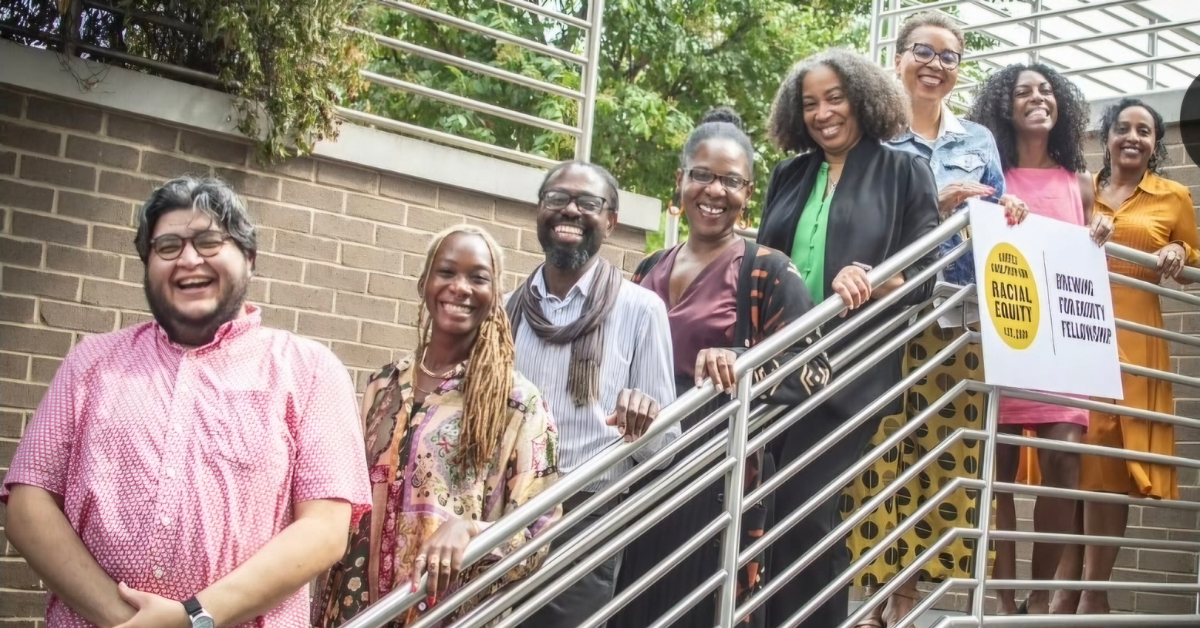
The Brewing for Equity fellows in Atlanta
Tapachula was the moment everything converged. Rosalba had given me a model for what it looks like when origin isn’t a chapter in someone else’s supply chain story, but the whole story, told by the people who lived it. I was at the same origin as the coffee, and whatever I’d been trying to articulate about authorship, proximity, and who gets to decide what a cup means, I stopped needing to articulate it. I could just taste it.
The Relational Shift
Coffee innovation gets framed around technology. Faster logistics, more precise extraction, better fermentation data. That work is real and I respect it. But the shift that will define where this industry goes next isn’t technical. It’s relational — not in the soft sense, but in the structural sense. Who holds authorship. Who defines flavor. Who decides what a cup of coffee means before it ever reaches your hands.
Those questions have answers baked into the supply chain. For a long time, those answers pointed in one direction: away from origin. Which is, if you think about it, a genuinely strange place to start.
The dominant model for decades has been destination roasting. Green coffee leaves producing countries, gets transformed closer to consuming markets, and somewhere in that distance, flavor becomes interpreted through someone else’s framework. The coffee carries everything: the soil, the altitude, the specific hands that picked and sorted it. Yet, the meaning gets assigned elsewhere. It’s like sending someone a letter and letting the mail handler decide what it says.
The relationship gets flattened into a transaction. That flattening shows up in the cup, in the relationship with the farmer, in who gets to be considered an expert, and in whose palate becomes the reference point for what "good" even means. Coffee has always had a "natural order," but it turns out that order was constructed deliberately by those who benefited from it. The bean didn’t ask for any of that.
Roasting is transformation. Not metaphorically; thermodynamically. Heat restructures the physical architecture of the bean. What gets revealed depends entirely on variables in relationship with each other: temperature, airflow, timing, the specific conditions of that particular day. Change one thing and everything shifts. There’s no isolated cause and effect. There’s only a system responding to itself.
Challenging the Standard
At Quantum Seeds, we work with producers who roast at origin, which means the person who grew the coffee also gets to decide what it becomes. That sounds obvious when you say it out loud. In practice, it destabilizes the entire logic of how specialty coffee has positioned itself.
When origin roasters bring their coffee to market, they often arrive with flavor profiles that don’t fit neatly into the frameworks that consuming markets developed without them. Roast curves calibrated for altitude; processing decisions made by people who have been tasting that specific microclimate for generations. It doesn’t map onto what a lot of buyers expect, and some buyers get uncomfortable.
That discomfort is the most interesting thing in the industry right now.
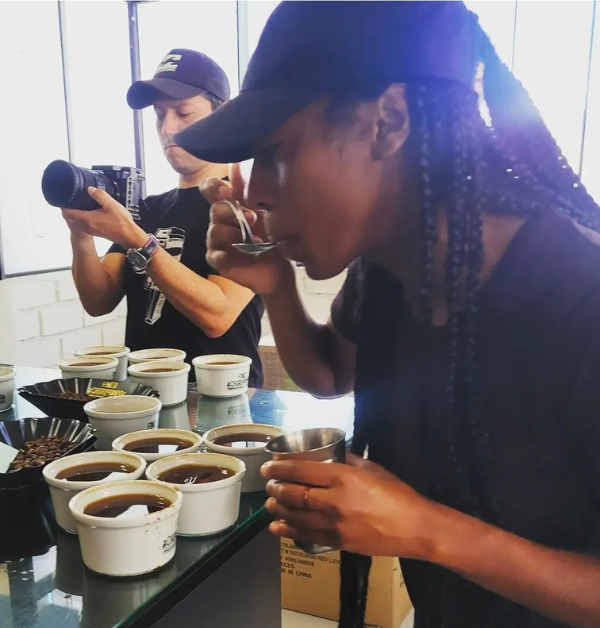
Cupping in Peru
I’ve been asked, more than once, whether origin roasting is "really specialty coffee"; read: whether it meets the standard. And I find that question genuinely delightful in how much it reveals. Whose standard? The standard was invented by the people who set up the current system. Of course the standard fits the current system. That’s what standards do.
The more useful question is: what are we optimizing for?
If the answer is a consistent flavor profile that performs reliably in a café in Copenhagen, the current system is fine. If the answer is a cup that carries the full authorship of everyone who made it, the current system is leaving most of the story on the table.
Redefining Hospitality
This connects deeply to how we practice hospitality. There is a vast difference between making someone feel served and making them feel received. The first is transactional. The second requires presence - someone who is actually in the room with you, not executing a script at you.
A coffeehouse that serves origin-roasted coffee is, structurally, doing something different from one that serves commodity coffee beautifully presented. The first one is asking you to be in relationship with a place. The second one is asking you to trust the curation. Both are valid. But only one of them changes what a city feels like.
Which brings me to Los Angeles. And Inglewood specifically. And 2028.
The Olympics are a hospitality problem at scale. You have the world arriving in one city, and the city has approximately ten seconds to communicate who it is, what it values, what it thinks the future looks like. Most cities answer that question with stadiums and transportation logistics. Los Angeles has an opportunity to answer it differently.
Inglewood is already changing. It’s already a place where something is being built, both deliberately, by people who have always been there and by people who are choosing to be there. What would it mean for that city, during the global moment of 2028, to be known not just for sports venues but for a different kind of gathering? For coffeehouses that function as cultural infrastructure; places where origin roasters from Brazil, Ethiopia, Colombia, Indonesia are pouring cups that carry full authorship, where the hospitality is the point, where the sensory experience is inseparable from the story of who made it?
That’s not a branding exercise. That’s an argument about what global hospitality can look like.
The industry will keep innovating technically. Extraction will get more precise, fermentation will get more controlled, and AI will do something to the supply chain that we’ll all have feelings about. But the transformation that matters over the next twenty years is relational. It’s about returning authorship to origin, building hospitality structures that hold that authorship rather than flatten it, and understanding that a cup of coffee is a coordinate. It carries someone’s decisions all the way to your hands.
The question is whether we receive it as such. Whether the infrastructure catches up to that possibility.
I think we can. Even if we must build it ourselves.
Insider Bio
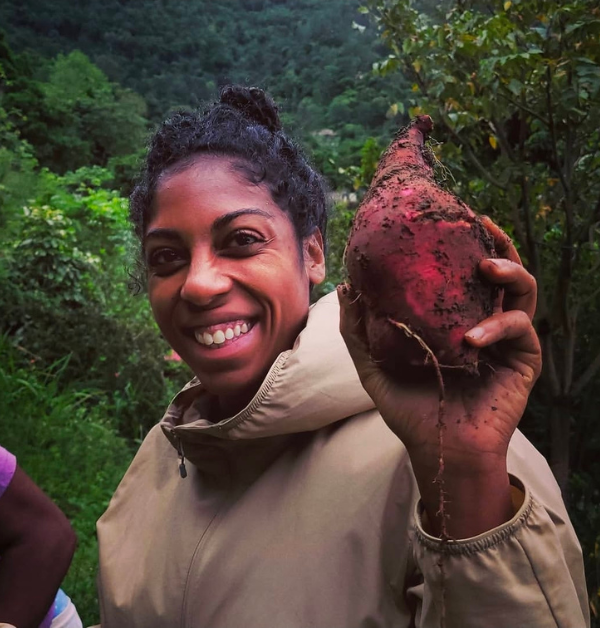
Shanita Nicholas is the founder of Quantum Seeds, specializing in origin-roasted sourcing and specialty coffee education. A certified Q Grader and regular educator across the industry, she is based in Los Ang,eles where she works at the intersection of coffee supply chains, hospitality, and community infrastructure.
Ready to challenge your palate and experience true authorship in the cup? Join Shanita in the Cupping Corner at our next show for her immersive sensory session, Heritage and Heat: A Cupping Journey through Origin, Time, and Roast Profile.
This hands-on flight guides participants through coffee's history and geography—from its earliest traditions at origin to modern expressions shaped by engineering, culture, and thermodynamics. You will taste coffees roasted entirely within or near their countries of origin to experience firsthand how local traditions, microclimates, and heat application imprint themselves on the cup. We will explore exactly how variables like rate of rise and energy transfer shape flavor differently at origin versus destination, giving you a completely redefined perspective on what a cup of coffee can mean.